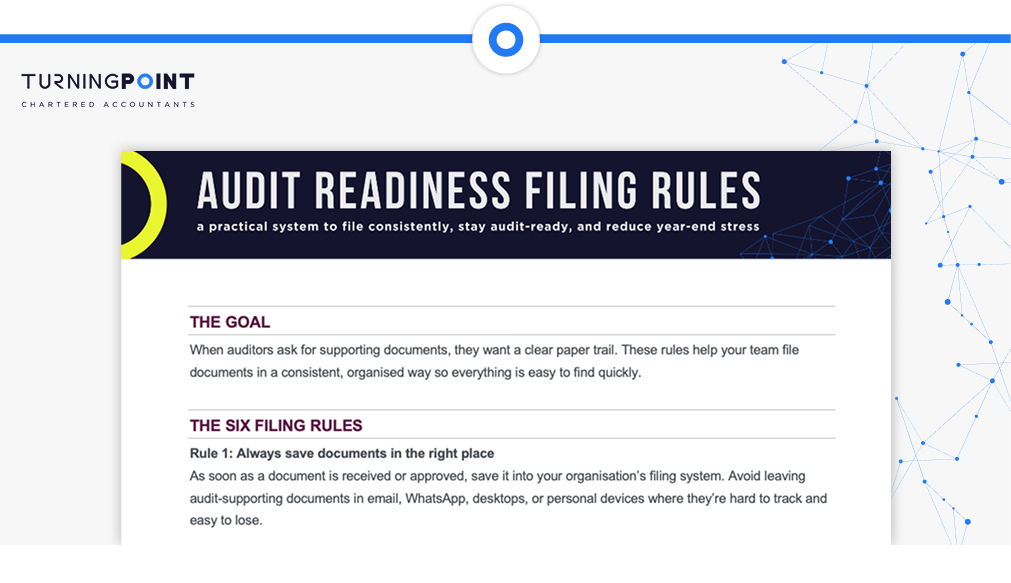
audit readness filing rules FOR SOUTH AFRICAN NPOS
A practical filing system to keep records consistent, easy to find and audit-ready all year.
WHAT THESE AUDIT READINESS FILING RULES HELP YOU DO
Audit readiness filing rules help NPO’s keep records, supporting documents and audit evidence filed in the same place every time. Use these audit readiness filing rules to organise your files consistently, and find documents fast.
When auditors ask for supporting documents (such as invoices, proof of payment, or reports), it helps to have your records clearly organised so the audit process can move forward without unnecessary delays. These rules help your team file documents correctly and find them quickly.
HOW THESE FILING RULES SUPPORT YOUR AUDIT PROCESS
These filing rules give you a simple structure for where documents go, how files should be named, and what to keep for month-end and audit support. They are built for South African NPOs and help your team stay consistent, even when different people handle filing.
If you are preparing records for review, these filing rules complement the Audit Readiness Checklist (Linked below) by helping your team file and name documents in a way auditors can follow.
HOW TO USE IT EACH MONTH
Use the filing rules as part of your monthly close off routine. As you complete reconciliations, approvals, and reviews, save each item straight into the correct folder using the naming rule. Following the same steps each month prevents missing documents and reduces year-end clean-up.
FILING TASKS THESE RULES COVER
These audit readiness filing rules cover the most common finance documents auditors request. They focus on practical filing habits, clear file naming, and saving documents in the correct location so your team can respond quickly.
CORE FILING RULES INCLUDE:
Save documents into your organisation’s filing system straight away (avoid duplicates across email, WhatsApp, desktops, or personal drives).
File month-end records consistently every month, so they’re easy to find when needed.
Use a consistent file naming format (date + description + version).
Save supporting documents together (for example the invoice/claim, proof of payment, and any emails or sign-offs linked to it).
Keep reconciliations and supporting schedules easy to trace back to the source records.
Separate draft and final documents clearly.
Keep final month-end records unchanged once filed (only update by adding a new version, not overwriting).
QUICK NOTES
Consistency matters more than perfection – file the same way every month.
Save supporting documents as you go (invoices, proof of payment, bank statements, emails) instead of chasing it later.
If you outsource accounting, these rules still keep your internal records audit-ready.
COMMON QUESTIONS
Do we need to change our whole system to use this? No. Start by applying the naming format and filing consistently first. Then tidy up older documents gradually over time.
Will this help at audit time? Yes. Clear filing rules reduce back-and-forth, prevents missing documents, and helps auditors follow the supporting documents quickly.
Can a small team use this? Yes. The structure is designed to be simple. If more than one person files documents, the rules become even more valuable.
Talk to an expert
Need help setting up an audit-ready filing system?
Don’t let a messy filing system derail your compliance. We partner with NPOs to implement structured workflows and curate complete financial records that ensure your organisation is perfectly prepared for your auditors to conduct a swift, high-standard audit.
These free resources below will help you keep records consistent, reduce missing documentation, and strengthen your organisation’s financial management processes.
A ready-to-use folder structure to keep audit and finance documents organised. Makes it easier to find what you need faster. Pair this with the Audit Readiness Filling Rules resource so you and your team can file consistently, and reduces last-minute scrambling.
A simple, practical checklist to get your files audit-ready. Covers the core documents and supporting schedules auditors typically request, so your team can close the year cleanly and reduce back-and-forth.
A monthly payroll checklist to keep inputs, approvals, and supporting documents consistent. Helps you catch changes early, reduce errors, and file proof each month so payroll stays clean and audit-ready.